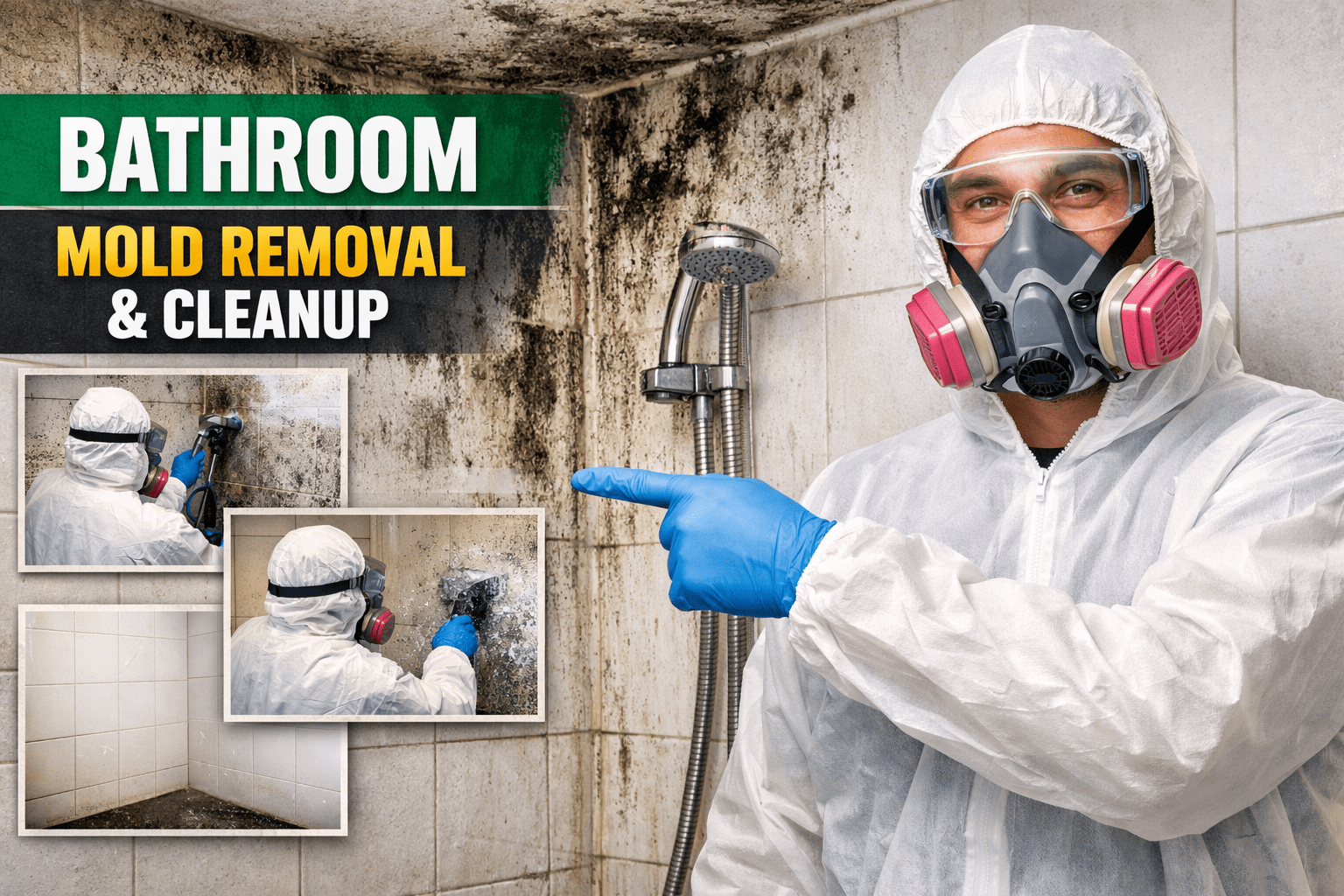
Bathroom Mold Removal & Cleanup Service Areas in Mississippi, MS
Mississippi’s humidity, steamy showers, and small ventilation gaps can turn grout lines, ceilings, and vanity areas into repeat mold hotspots. If you’re seeing dark spotting, persistent musty odor, peeling paint, or soft drywall, we help you identify what’s feeding the mold and outline a safe cleanup plan that prevents quick re-growth.
Bathroom Mold Cleanup Services Mississippi Homeowners Request
Bathroom mold is usually a moisture + ventilation problem first. The best results come from: (1) finding the moisture source, (2) improving drying and airflow, and (3) removing/treating affected materials the right way—without spreading spores into clean rooms. Here are the most common bathroom mold cleanup requests across Mississippi.
Bathroom Mold Inspection & Moisture Checks
We look for visible growth, staining, swollen trim, loose caulk, and humidity patterns—plus likely hidden damp zones behind showers, around toilets, and under vanities.
Shower, Tub, Tile & Grout Cleanup Guidance
Mold can anchor in porous grout and caulk when moisture lingers. We outline practical cleaning steps, safer product choices, and when re-caulking or re-grouting is the smarter long-term fix.
Ceiling & Drywall Mold Remediation Planning
Bathroom ceilings and upper drywall can grow mold when steam condenses and paint films fail. We help define whether it’s surface growth or a material replacement situation.
Vanity, Baseboard & Cabinet Base Mold Issues
Slow leaks at supply lines, drain traps, and toilet seals can keep cabinets damp. We help you pinpoint the “wet zone” and decide what needs drying, treatment, or replacement.
Vent Fan & Airflow Improvement Checklist
Many repeat mold problems come down to poor exhaust and high indoor humidity. We outline fan run-times, door/trim gaps, and airflow basics that help bathrooms dry out faster after showers.
Post-Leak / Post-Flood Bathroom Next Steps
After storms or plumbing leaks, fast drying decisions matter. We provide “what to do first” steps to reduce hidden mold risk behind walls and under flooring.
Musty Odor Troubleshooting
If odor persists even after cleaning, the source may be behind the shower wall, under the vanity, or around a toilet base. We narrow the likely area so you don’t waste money guessing.
Humidity Prevention Plan
Long-term control typically comes down to daily drying habits, proper exhaust, fixing micro-leaks early, and keeping indoor humidity in a safer range—especially in coastal and river areas.
Why Bathroom Mold Is Common in Mississippi
Mississippi’s warm seasons and frequent humidity make bathrooms a high-risk room—especially when exhaust fans are weak, showers run hot, and surfaces stay damp. Mold doesn’t need “flooding” to start; it can grow from repeated condensation, slow plumbing seepage, and trapped moisture behind caulk, grout, or paint.
High Humidity + Condensation
Steam from showers condenses on cooler ceilings, mirrors, and upper walls. If the bathroom doesn’t dry quickly, moisture repeats daily and mold finds a foothold.
Weak or Short Exhaust Fan Run-Time
Fans that aren’t vented properly (or aren’t run long enough) leave humid air trapped. That lingering moisture keeps grout, caulk, and paint damp.
Caulk & Grout Breakdown
Cracked caulk and porous grout can hold moisture and “feed” dark spotting. Cleaning helps, but replacing failing sealants is often the real solution.
Slow Leaks Under Sinks & Around Toilets
Drip-by-drip moisture under a vanity or at a toilet base can stay hidden until the cabinet base swells or a musty odor appears.
Paint Film Failure on Ceilings
Bathrooms need paint systems that tolerate moisture. When paint peels or chalks, moisture can sit on the surface longer, raising mold risk.
Poor Airflow & Door-Closed Bathrooms
If air can’t move (door always closed, no gap, minimal HVAC return), moisture lingers. Better airflow is often the cheapest prevention.
What to Do First if You Suspect Bathroom Mold
These steps focus on stopping the conditions that keep mold returning. If you have widespread growth, soft drywall, persistent odors, or repeated leaks, a professional inspection helps you avoid trial-and-error spending.
1) Dry the Room After Every Shower
Run the exhaust fan during the shower and after (long enough for the room to feel dry). Wipe down wet surfaces if condensation is heavy.
2) Fix Leaks (Even “Small” Ones)
Check supply lines, drain traps, toilet bases, and caulk lines. “Tiny” leaks can keep materials damp for weeks and drive hidden growth.
3) Don’t Just Bleach and Forget
Bleach can lighten stains, but it doesn’t solve moisture or damaged caulk/grout. The goal is moisture control + correct cleanup + repair where needed.
4) Watch for Material Damage
Bubbling paint, soft drywall, swollen baseboards, and warped cabinet bases are signs the problem may be deeper than surface cleaning.
5) Confirm Scope Before Major Work
A little spotting can be condensation; widespread ceiling growth may indicate ventilation failure or material saturation. Confirm what’s feeding it before paying for broad services.
Quick clue: If mold returns quickly after cleaning, suspect ventilation run-time, humidity level, or a slow leak. If the odor is strongest under the vanity or near the toilet, inspect plumbing and seals first.
Our Bathroom Mold Cleanup Service Areas Across Mississippi, MS
Search your city or ZIP to find local bathroom mold cleanup support across Mississippi. Each service-area page can include common causes (humidity, leaks, ventilation), inspection guidance, and recommended next steps for your location.
Need Help Stopping Bathroom Mold From Returning?
If you’re dealing with repeat mold spots, peeling paint, or musty odor, start with moisture control and a clear plan. We can help you figure out what’s feeding the problem and what to do next.